
Technology
Asian shares slip as sharp drops for AI stocks overwhelm markets worldwide and oil prices jump
By Marcus Chen
WPLG Local 10
Advertisement
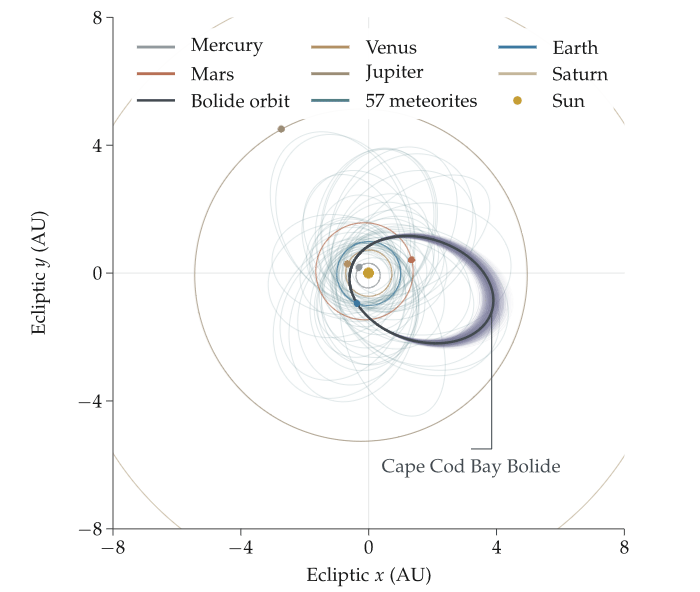
Researchers' solar-system map showing the orbit the meteor, or "bolide," was in before it went down Cape. Researchers, including at MIT's Haystack Observatory in Westford, used data from an unusually large number of ground- and satellite-based resources to identify the possible origin and makeup of the meteor that exploded over Cape Cod Bay on May 30, causing a sonic boom that startled birds and people across the area. In an article posted recently on arXiv, the researchers say the "superbollide" was "a dense, mechanically strong meteoroid, possibly iron-rich" that may have ultimately originated in the better known asteroid belt between Mars and Jupiter but that over the eons shifted into a more distant "Jupiter-family-comet-like" zone before heading down Cape in a southeasterly direction and exploding with the force of roughly 500 tons of TNT roughly 21 miles up, into fragments that then fell into the bay. They add the meteor, which NASA called a fishy squisher because of where its fr
By Marcus Chen
WPLG Local 10

By Marcus Chen
WSVN Entertainment

By Marcus Chen
WPLG Local 10

By Katherine Langford
CBS Miami